Assessment: Age-specific focused and head-to-toe assessments.
Patient Teaching: Proper use of assisstive devices (walker) when standing from chair and the importance of socialization and leisure activities in long term care facilities.
Evidence-based Practice: Allowing the aged or debilitated client to remain as autonomous as possible and incorporating family into patient care/rehabilitation. See Case Study
Competencies met during rotation: Effective interaction with patients/families from a different era than myself, Administration of a one-step Mantoux test, Assessment, cleansing, packing, and dressing of various stages of pressure ulcers, Providing effective and safe care of the confused elderly client, Cleansing and changing of a urostomy bag, Increased confidence in medication pass, and assisted instructor by teaching fellow student how to take a blood glucose reading.
Personal Reflection: This clinical rotation gave me a lot of experience in expanding my skills. Wound assessment and treatment was commonly practiced in this rotation, and I was able to expand upon my skills in caring for the elderly that I had previously learned and applied in my work as an STNA.
Assessment: Continuation of head-to-toe assessment and focused patient-specific assessment of the adult patient.
Patient Teaching: The importance of medication compliance in disease management and the complications and outcomes of untreated/unmanaged Type II Diabetes Mellitus.
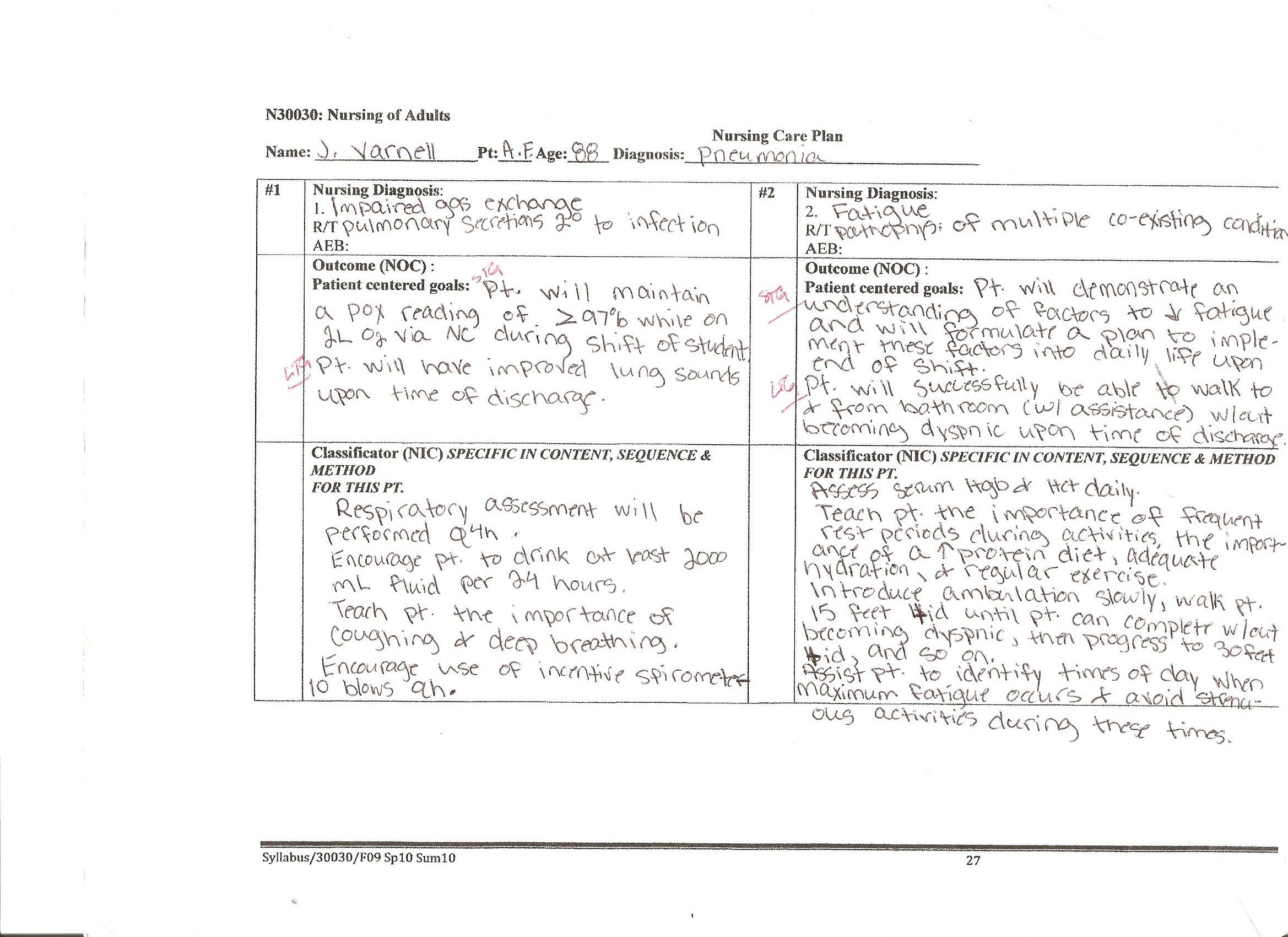
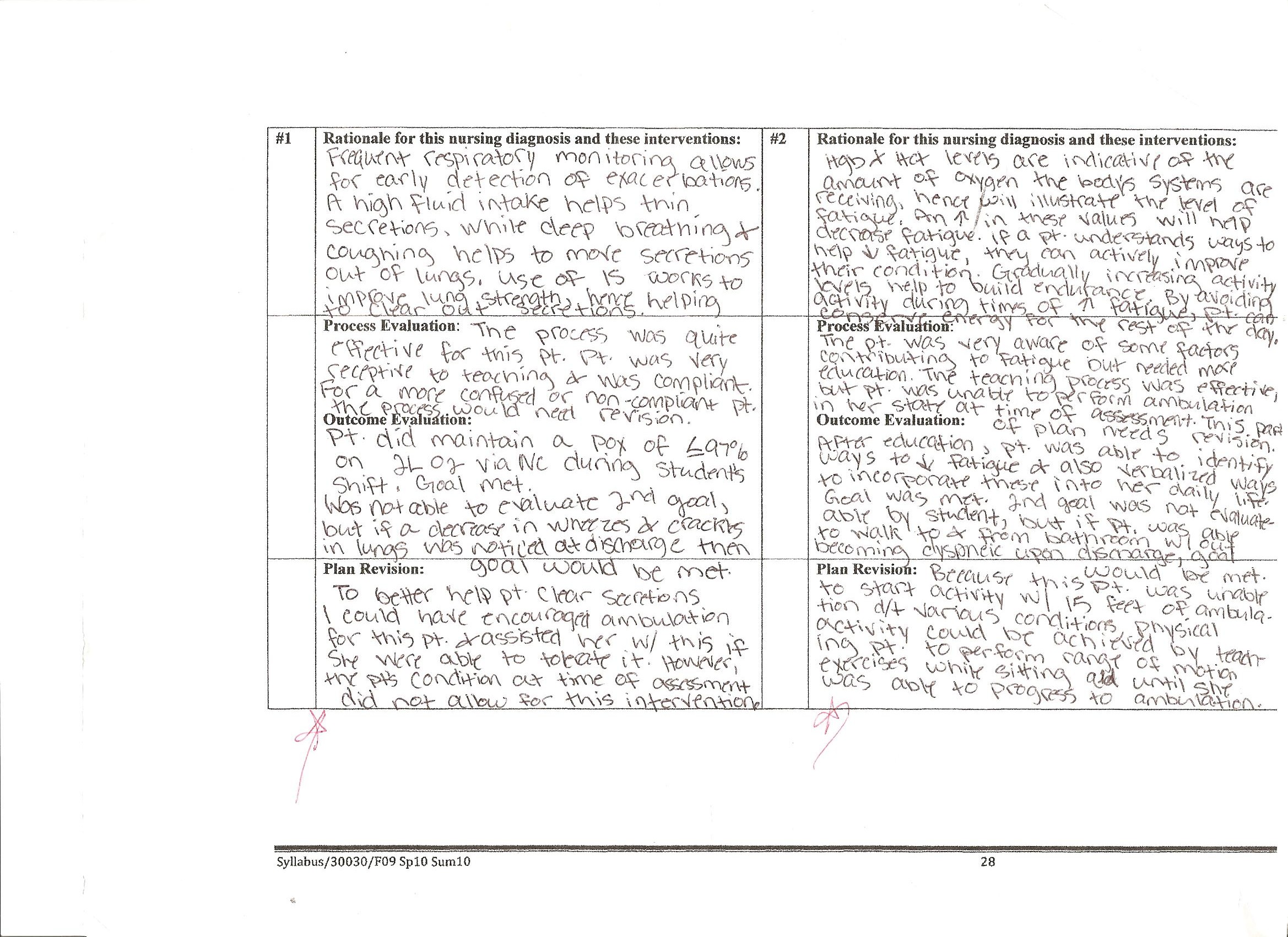
Evidence-based Practice: See care plan (part1, part 2)
Competencies met during rotation: Spiking/hanging IVPB medications, subcutaneious injections, gaining knowledge of the method and caution used when handling a Heparin drip, extension of patient-nurse communication, Accuchecks, More extensive practice of IV pus medications, and increased confidence in charting.
Personal Reflection: This rotation really let me put all of the things in previous learned courses together. I learned a lot about the complications of Diabetes Mellitus and its relation to cardiovascular and renal problems, and was better able to link together patients' co-morbidities.
Assessment: BUBBLEHEB, REEDA, and newborn assessment.
Patient Teaching: Breast care, Hazards of co-sleeping, and sitz bath use.
Evidence-based Practice: See Case Study
Competencies Met During Rotation: IV push medication administration, IM medication administration (newborn), subcutaneous medication administration, heel sticks and newborn blood glucose measurement, ability to detect non-reassuring fetal heart rate patterns on monitors.
Personal Reflection: I thoroughly enjoyed this very specific area of nursing. I was able to educate new mothers and fathers on various aspects of infant care and had had several very receptive mothers when educating about personal care after delivery. Being involved in the families' exciting arrival of their new additions brought me much joy and I felt that I learned quite a bit during this clinical experience.
Assessment: Pediatric head-to-toe assessment, focused respiratory, GI and EENT assessments.
Patient Teaching: Smoking cessation, disease pathology, home medication use.
Evidence-based Practice: See Case Study
Competencies Met During Rotation: Effective interaction with and explanation of procedures to children and parents, Hanging IV infusions, attaching tubing, setting pump rates, and correcting problems with IV pumps, Calculating safe pediatric medication doses, Charting for childhood asthma pathways, IV medication administration (toddler), and IV discontinuation.
Personal Reflection: The practice I gained during this rotation in communication is indispensable. I had to communicate with less-than-interested parents on several occasions, and making them realize just how important their child's health was was not always an easy task. I feel that I now have a better understanding of family dynamics and how to get through to some of the more difficult families of ill children.